Affiliate disclosure: HotColdRecovery.com is a participant in the Amazon Services LLC Associates Program. As an Amazon Associate we earn from qualifying purchases. Prices and availability are accurate at publish time but may change.
If you’re shopping for a home sauna in 2026, three questions decide almost everything: infrared or traditional, indoor or outdoor, and DIY-friendly or professional install. Get those right and everything else — chromotherapy, salt therapy, entertainment systems — is optional garnish. Get them wrong and you’ll be selling a $3,000 box on Facebook Marketplace six months later.
This guide compares home saunas across the main categories, from portable infrared blankets to outdoor cedar barrels, using manufacturer specs and published listing details.
The Three Types That Matter
1. Infrared Saunas (Best Overall for Home Use)
Infrared saunas use carbon or ceramic panels to heat your body directly, not the air. They run at 120-158°F (versus 170-200°F for traditional), warm up in 10-15 minutes (versus 30-45), and use about 1500-2000 watts (roughly the same as a hair dryer). They’re a common pick for home buyers because installation is straightforward and running cost is manageable.
Best fit: Apartments/condos, first-time sauna owners, anyone who values quick warm-up.
Recommended entry point: HigherDOSE Infrared Sauna Blanket (Low EMF, 9 Temp Levels) — nine adjustable temperature levels, low-EMF heating, a handheld controller and an industrial-grade zipper, plus a lining with amethyst, tourmaline, charcoal and clay. No installation, and it folds away between sessions. Follow HigherDOSE’s manual for temperature and session length, start on a low setting, don’t fall asleep in it, and get out if you feel dizzy, light-headed or too hot. Skip it if you’re pregnant, and check with your doctor first if you have a heart or blood-pressure condition, poor circulation or reduced heat sensation, or take medication.

- Home Infrared Sauna, Anywhere – This portable infrared sauna blanket brings the full-body benefits of a traditional infrared sauna…
- Crystal-Infused for Mind-Body Balance – This sauna blanket is lined with amethyst, tourmaline, charcoal, and clay emitting negativ…
- Low EMF, High Standards – Unlike typical infrared sauna wraps, our low-EMF blanket is engineered with minimal electromagnetic and …
2. Traditional (Finnish) Saunas
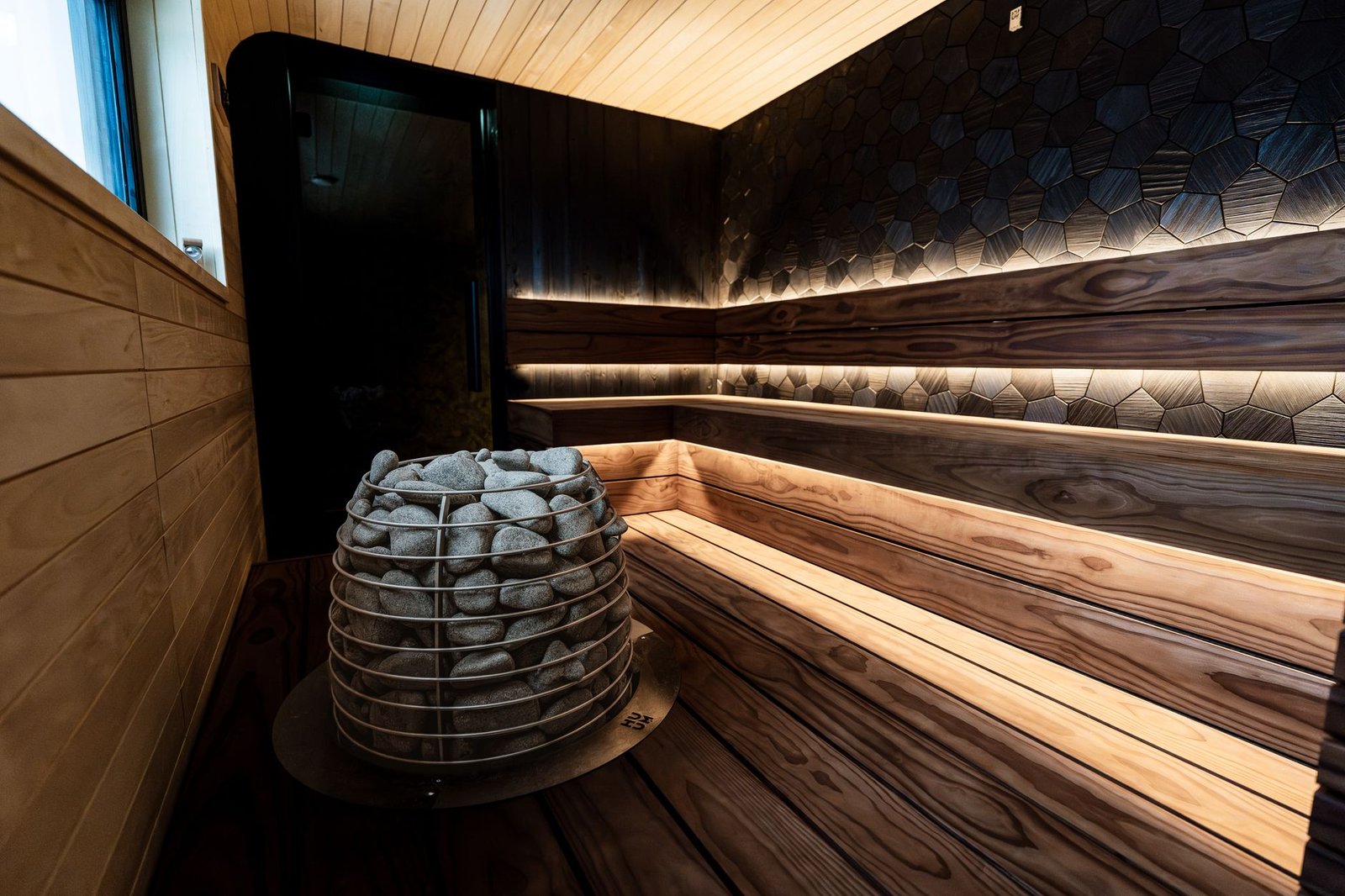
Traditional saunas use an electric or wood-fired heater to warm stones, which heat the air to 170-200°F. They deliver the deep sweat that infrared can’t match, plus the sensory experience of loyly (water on stones producing steam).
Best fit: Sauna purists, larger homes with a dedicated wellness space, users who want the social multi-person experience.
Trade-offs: 30-45 minute warm-up, higher electricity draw (4000-6000W), more complex install if hardwired.
3. Steam Rooms
Not technically a sauna — steam rooms run at 100-115°F but at 100% humidity. Different experience: moist heat at a lower temperature instead of dry, hotter air. Requires more waterproofing and often bathroom-adjacent install.
Best fit: People who prefer humid heat, tile bathroom retrofit situations. If you have asthma or another breathing condition, ask your doctor before using a steam room.
Indoor vs Outdoor
Indoor pros: Year-round use regardless of weather, no permits in most jurisdictions if freestanding, easier electrical run from existing panel.
Indoor cons: Needs the clearance specified in the manufacturer’s install manual, plus a properly rated circuit (a GFCI-protected or dedicated circuit where the manual or your electrician calls for it, and hardwired heaters installed by a licensed electrician), ideally on a moisture-tolerant floor (tile, sealed concrete), ventilation matters more.
Outdoor pros: No indoor space consumed, better ventilation, aesthetic on a patio or deck.
Outdoor cons: Warm-up takes noticeably longer in cold weather, needs weatherproof construction, permit may be required depending on size and municipality.
Price Ranges and What You Get
| Budget | What You Get | Best For |
|---|---|---|
| $200-$800 | Infrared blanket or portable dome | First-time buyers, apartments |
| $1,500-$2,500 | 1-2 person infrared cabinet | Regular home use, dedicated spot |
| $3,000-$4,500 | 2-3 person infrared, or entry traditional | Couples/families, better wood/electronics |
| $5,000-$8,000 | Outdoor barrel/cabin sauna or high-end indoor | Multi-person, backyard integration |
| $10,000 and up | Custom builds, commercial-grade | Wellness rooms, luxury installs |
What to Ignore (Marketing Fluff)
- “Zero EMF” claims — All electric saunas emit some EMF. Look for brands that publish measured EMF values and say how and where they were measured. An unmeasured claim is just a claim.
- Chromotherapy LED lights — Nice ambience, but treat it as a mood-lighting feature, not a health feature, and don’t pay much extra for it.
- Bluetooth speakers — Nice-to-have, but a separate heat- and moisture-rated speaker kept outside the hottest zone is often the more flexible option.
- “Medical grade” language — Not a regulated term for consumer saunas. Ignore.
What Actually Matters
- Wood type — Canadian hemlock for infrared (low-VOC, cost-effective). Nordic spruce or clear cedar for traditional (heat + moisture tolerance). Avoid pressed particleboard at any price.
- Heater panel coverage — For infrared, more panels = more even heat. Ceramic runs hotter, carbon distributes better. Both work; carbon is generally friendlier for beginners.
- Warranty length — Compare heater and cabinet warranties between brands, and read what’s covered and for how long before you buy.
- Ventilation cutouts — Traditional saunas need proper vent design. Infrared less critical but a small vent still helps.
Full Home Sauna Kit on Amazon
All our home sauna picks — blankets, sauna heaters, chromotherapy add-ons, and towels — in a single curated Amazon Idea List.
Frequency and Session Length Basics
For newcomers: start at 3 sessions per week, 15-20 minutes each, at 130-140°F. Work up over 3-4 weeks to 4-5 sessions of 30-40 minutes at your preferred temp. Drink water before and after each session, skip alcohol, and get out right away if you feel dizzy, nauseated or unwell. Many people follow a sauna session with a cold shower or plunge as part of a contrast-therapy routine. If you do, ask your doctor first if you have a heart, blood-pressure or circulation condition, and never plunge alone.
FAQ
Q: Do I need a permit for a home sauna?
Freestanding indoor infrared saunas under 200 square feet typically don’t require permits in most Canadian and US municipalities. Outdoor saunas and hardwired traditional saunas often do. Check with your local building department.
Q: How much does it cost to run a sauna?
Infrared cabinets: about $0.15-$0.25 per 40-minute session at typical North American electricity rates. Traditional: $0.60-$1.20 per session. Blankets: $0.05-$0.10 per session.
Q: Can I finance a sauna purchase?
Some retailers and brands offer buy-now-pay-later or financing plans; check the checkout page for what’s offered. Do the math on total cost including interest and fees before you sign up.
Q: Infrared vs traditional — which has better health benefits?
Research is mixed and the differences are smaller than marketing suggests. Choose based on your lifestyle (space, warm-up time, install complexity), not marketing claims about superiority.
Shop Our Full Recovery Storefront
Every sauna, cold plunge, and recovery tool we cover is on our Amazon Storefront — organized by category and price.


Leave a Reply