Tag: Sleep Recovery

  • Red Light Therapy Timing: When to Use Panels for Sleep, Skin, and Recovery

    Red Light Therapy Timing: When to Use Panels for Sleep, Skin, and Recovery

    Affiliate disclosure: As an Amazon Associate, Hot Cold Recovery earns from qualifying purchases. Product recommendations are our honest opinion based on published specs, warranty terms, and available user reports. Prices reflect Amazon US at time of publication and are subject to change. Full disclosure.

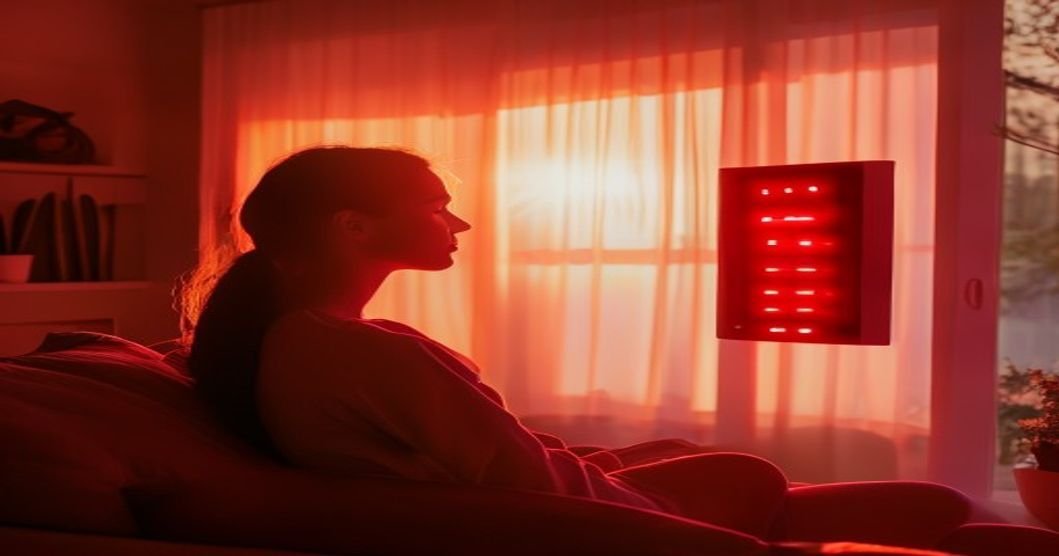
    Most red light therapy guides tell you what wavelengths to buy. Very few tell you WHEN to use them. And timing turns out to matter as much as the panel specs – morning red light does different things than evening red light, and using RLT at the wrong time can actively work against what you’re trying to achieve.

    This is the timing guide for red light therapy at home.


    What time-of-day changes about red light therapy

    Morning (6-10 AM)

    Red light in the morning supports circadian rhythm reset – especially useful for shift workers, jet lag recovery, and people with delayed sleep phase (natural night owls). The 660nm red wavelength signals the eye’s circadian receptors similar to sunrise. Morning RLT can improve daytime alertness and evening sleep quality.

    Midday (11 AM – 2 PM)

    Best time for skin-focused sessions. Metabolism is at baseline, cortisol is stable, and you can do 20-30 min sessions without energy interference. Ideal for anti-aging and collagen production goals.

    Late afternoon (3-6 PM)

    Best window for muscle recovery sessions if you trained earlier. Post-workout RLT (2-4 hours after) shows the strongest research support for reducing DOMS (delayed onset muscle soreness).

    Evening (7-9 PM)

    Can support wind-down for some people. The 830nm near-infrared component activates mitochondria in a way that some users report as calming. BUT – 660nm red visible light can suppress melatonin similar to blue light if the panel is bright enough. Use dimmer settings or short sessions in the evening.

    Pre-bed (within 90 min of sleep)

    Generally avoid full-power sessions. If you use RLT this close to bed, keep sessions under 10 minutes and use only near-infrared (invisible to the eye, no melatonin suppression risk).


    Protocols by goal

    Skin health (anti-aging, collagen)

    • Timing: midday, ideally daily
    • Session: 10-20 min on face at 6-8 inches
    • Wavelengths: 630nm + 660nm
    • Frequency: 5 sessions/week for 12 weeks minimum

    Muscle recovery

    • Timing: 2-4 hours after training
    • Session: 10-15 min on treated muscle at 6 inches
    • Wavelengths: 810nm + 850nm (near-infrared penetrates deeper)
    • Frequency: after each training session

    Circadian rhythm reset (shift work, jet lag)

    • Timing: within 30 min of waking
    • Session: 10-15 min at 12-18 inches
    • Wavelengths: 660nm dominant
    • Frequency: daily for 2 weeks, then as needed

    Joint pain relief

    • Timing: 2x/day – morning and evening
    • Session: 15-20 min on affected joint at 4 inches
    • Wavelengths: 810nm + 850nm
    • Frequency: daily until pain reduces, then maintenance 3x/week

    Gear that makes timing easier

    Red Light Panel with Built-In Timer

    Panels with programmable timers make consistent session length trivial. Set 15 min, walk away, shuts off automatically. Panels without timers require phone-timer workaround.

    Check current price on Amazon →

    Adjustable Panel Stand (Positioning)

    The 6-inch distance recommendation matters. An adjustable stand lets you set panel height for face, torso, or leg sessions without holding it. Under .

    Check current price on Amazon →

    Blue-Light Blocking Glasses (Evening RLT)

    If you use RLT in the evening, blue-light-blocking glasses reduce the melatonin-suppression risk from visible red wavelengths. Amber lens filters the specific frequencies.

    Check current price on Amazon →

    Sunrise Alarm Clock (Morning RLT Companion)

    Wake-up alarm that gradually brightens to 660nm before your RLT session amplifies the circadian reset effect. Best paired with morning RLT protocol.

    Check current price on Amazon →

    Recovery Stack Tracker (Log Your Sessions)

    Simple notebook or app to log session times, durations, and effects. Necessary if you want to know what protocol is actually working for YOU vs generic recommendations.

    Check current price on Amazon →

    Red Light Watch/Wearable (Portable Option)

    Wrist-worn red light devices for on-the-go dosing. Convenient but much lower irradiance than a panel. Best used as SUPPLEMENT to panel sessions, not replacement.

    Check current price on Amazon →


    Common timing mistakes

    • Using RLT within 30 min of bed with full-power panels – can delay sleep by 15-30 min for melatonin-sensitive individuals.
    • Doing recovery sessions BEFORE workouts – RLT before training may slightly REDUCE workout adaptation. Use it after.
    • Inconsistent timing week-to-week – benefits compound with consistency. 5 sessions/week at random times underperforms 3 sessions/week at the same time.
    • Skipping the eye protection – direct panel view can cause discomfort. Not dangerous at typical distances but not comfortable.

    The honest bottom line

    For most home users, midday or late-afternoon sessions are the pragmatic default. Broadest research support, lowest risk of interfering with sleep, and most compatible with typical daily schedules.

    If you’re using RLT for a specific goal (circadian reset, sleep improvement, targeted recovery), timing matters more than panel specs. A modest panel used at the right time beats a premium panel used at the wrong time.

    Give any protocol 4-6 weeks before deciding it works or doesn’t. Red light effects are cumulative, not immediate.


    Not medical advice: Hot Cold Recovery publishes educational content about home wellness gear. The information here is not a substitute for professional medical advice, diagnosis, or treatment. Always consult a qualified healthcare provider before starting any new wellness practice, especially if you have a cardiovascular condition, are pregnant, or take medication. Home wellness devices are not FDA-cleared to treat, cure, or prevent any specific disease.
  • Sauna vs Cold Plunge for Sleep: Which One Actually Improves Sleep More

    Sauna vs Cold Plunge for Sleep: Which One Actually Improves Sleep More

    Affiliate disclosure: As an Amazon Associate, Hot Cold Recovery earns from qualifying purchases. Product recommendations are our honest opinion based on published specs, warranty terms, and available user reports. Prices reflect Amazon US at time of publication and are subject to change. Full disclosure.

    The single most common reason people invest in home sauna or cold plunge gear in 2026 is sleep improvement. The research on both modalities for sleep is moderately supportive – and often overhyped. This is the practical guide to which one actually works better for sleep, when to use each, and how to combine them if you have both.


    What the research actually says

    Sauna and sleep

    Multiple studies (Laukkanen et al, 2018 and follow-ups) show regular sauna use correlates with improved subjective sleep quality and reduced insomnia symptoms. Mechanism: post-sauna body cooling triggers the same drop in core temperature that naturally signals sleep onset. Best-supported protocol: 15-20 min sauna 1-2 hours before bed.

    Cold plunge and sleep

    Research on cold exposure and sleep is more mixed. Morning cold exposure improves subjective daytime alertness. Evening cold exposure can BOTH improve deep sleep (via increased slow-wave sleep) AND disrupt sleep onset (via sympathetic nervous system activation). Individual variation is high.

    The combination

    Contrast therapy (sauna then cold plunge) 1-3 hours before bed shows the strongest sleep-improvement effects in preliminary research. Mechanism: the post-contrast temperature drop is more dramatic than sauna alone.


    Which one to buy if sleep is your primary goal

    If you can afford both: both. Contrast therapy is the strongest sleep protocol.

    If you can afford one: sauna. Better research support for sleep specifically, more forgiving on evening timing.

    If budget is tight: a sauna blanket at $400 delivers 80% of the sleep-improvement effect of a full cabin at $3,000+.


    Timing protocols that actually work for sleep

    Sauna-only protocol

    • Session length: 15-25 minutes
    • Timing: 1.5-2 hours before intended bedtime
    • Post-session: cool shower, then rest in room temperature for 60-90 min
    • Frequency: 3-5 nights per week

    Cold plunge-only protocol (for sleep improvement)

    • Session length: 3-5 minutes
    • Timing: 3-4 hours before bedtime (avoid sympathetic activation too close to sleep)
    • Water temp: 45-50F (colder = more risk of sleep disruption)
    • Frequency: 3-4 nights per week

    Contrast protocol (sauna + cold)

    • Sauna 15 min, cold plunge 2 min, repeat 2-3 rounds
    • Total time: 60-90 min
    • Timing: 2-3 hours before bedtime
    • End with sauna (not cold) to avoid pre-bed sympathetic activation
    • Frequency: 2-3 nights per week (contrast is more intense)

    Gear to support the sleep protocol

    Sauna Timer (Precision Timing Matters)

    A dedicated sauna timer for consistent 15-25 min sessions. Most cabin saunas have built-in timers. Blanket users benefit from a separate timer that runs on the room clock.

    Check current price on Amazon →

    Sleep Tracker (Measure the Effect)

    The only way to know if your sauna or cold plunge routine actually improves your sleep is to measure. Oura, Whoop, and Apple Watch all track sleep with reasonable accuracy for at-home use.

    Check current price on Amazon →

    Cooling Mattress Pad (Post-Session Sleep)

    A cooling mattress pad extends the post-sauna body-temperature drop through the night. Particularly useful for hot summer bedrooms.

    Check current price on Amazon →

    Blackout Curtains (Sleep Hygiene Basics)

    Sauna and cold plunge work better on top of good sleep hygiene. Blackout curtains reduce sleep-onset time by 10-15 min for most people.

    Check current price on Amazon →

    White Noise Machine (Deep Sleep Support)

    White or brown noise machines extend deep sleep phases by 8-15 percent in studies. Adds to whatever sauna/cold plunge is doing.

    Check current price on Amazon →

    Red Light Wake-Up Alarm (Morning Timing)

    If you’re using morning cold plunge for alertness, a red-light wake-up alarm signals your circadian rhythm before you even get to the tub. Amplifies morning cold’s effect.

    Check current price on Amazon →


    What NOT to do

    • Cold plunge within 60 min of bedtime – sympathetic nervous system activation delays sleep onset.
    • Sauna sessions over 30 min close to bed – dehydration signals arousal, works against sleep.
    • Alcohol before or after either modality – both amplify alcohol’s negative sleep effects (reduced REM, more fragmented sleep).
    • Late-night intense contrast therapy – too much of a stressor for the pre-sleep window.

    The honest bottom line

    For sleep improvement specifically, sauna is the better single investment. Research is stronger, timing is more forgiving, and the mechanism (post-session body cooling) directly matches natural sleep onset.

    Cold plunge is a valuable morning tool for alertness but is trickier to time for sleep. Get sauna first, add cold plunge later if you want the contrast benefits.

    Track your sleep for 4 weeks before starting the protocol, then 4 weeks after. Real data beats hopeful interpretation.


    Not medical advice: Hot Cold Recovery publishes educational content about home wellness gear. The information here is not a substitute for professional medical advice, diagnosis, or treatment. Always consult a qualified healthcare provider before starting any new wellness practice, especially if you have a cardiovascular condition, are pregnant, or take medication. Home wellness devices are not FDA-cleared to treat, cure, or prevent any specific disease.