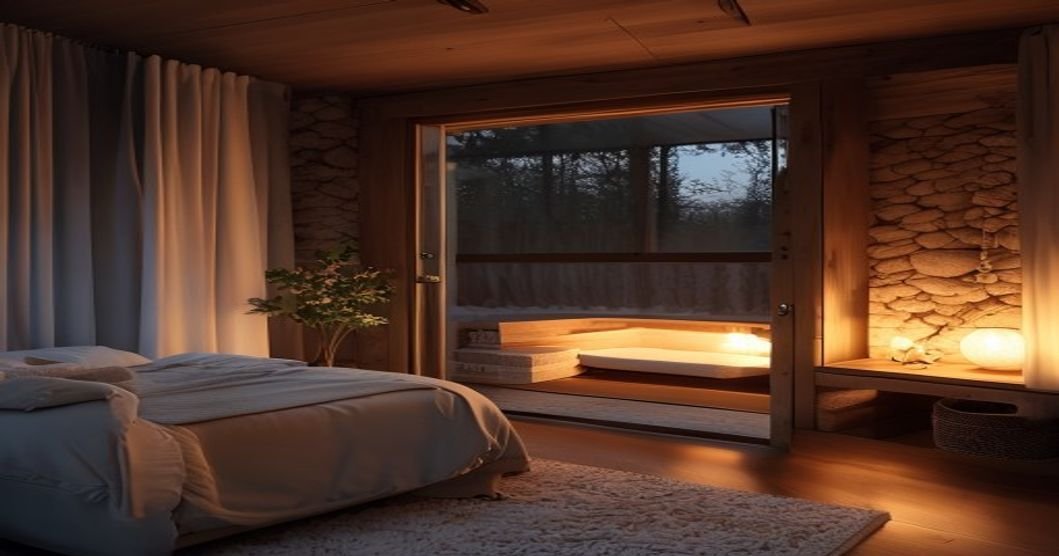
The single most common reason people invest in home sauna or cold plunge gear in 2026 is sleep improvement. The research on both modalities for sleep is moderately supportive – and often overhyped. This is the practical guide to which one actually works better for sleep, when to use each, and how to combine them if you have both.
Curated Cold Plunge Kit on Amazon
All our cold plunge picks – tub, chiller, water treatment, thermometer, and exit safety – collected in a single Amazon Idea List. Everything you need for a proper home cold plunge practice.
What the research actually says
Sauna and sleep
Multiple studies (Laukkanen et al, 2018 and follow-ups) show regular sauna use correlates with improved subjective sleep quality and reduced insomnia symptoms. Mechanism: post-sauna body cooling triggers the same drop in core temperature that naturally signals sleep onset. Best-supported protocol: 15-20 min sauna 1-2 hours before bed.
Cold plunge and sleep
Research on cold exposure and sleep is more mixed. Morning cold exposure improves subjective daytime alertness. Evening cold exposure can BOTH improve deep sleep (via increased slow-wave sleep) AND disrupt sleep onset (via sympathetic nervous system activation). Individual variation is high.
The combination
Contrast therapy (sauna then cold plunge) 1-3 hours before bed shows the strongest sleep-improvement effects in preliminary research. Mechanism: the post-contrast temperature drop is more dramatic than sauna alone.
Which one to buy if sleep is your primary goal
If you can afford both: both. Contrast therapy is the strongest sleep protocol.
If you can afford one: sauna. Better research support for sleep specifically, more forgiving on evening timing.
If budget is tight: a sauna blanket at $400 delivers 80% of the sleep-improvement effect of a full cabin at $3,000+.
Timing protocols that actually work for sleep
Sauna-only protocol
- Session length: 15-25 minutes
- Timing: 1.5-2 hours before intended bedtime
- Post-session: cool shower, then rest in room temperature for 60-90 min
- Frequency: 3-5 nights per week
Cold plunge-only protocol (for sleep improvement)
- Session length: 3-5 minutes
- Timing: 3-4 hours before bedtime (avoid sympathetic activation too close to sleep)
- Water temp: 45-50F (colder = more risk of sleep disruption)
- Frequency: 3-4 nights per week
Contrast protocol (sauna + cold)
- Sauna 15 min, cold plunge 2 min, repeat 2-3 rounds
- Total time: 60-90 min
- Timing: 2-3 hours before bedtime
- End with sauna (not cold) to avoid pre-bed sympathetic activation
- Frequency: 2-3 nights per week (contrast is more intense)
Gear to support the sleep protocol
Sauna Timer (Precision Timing Matters)
A dedicated sauna timer for consistent 15-25 min sessions. Most cabin saunas have built-in timers. Blanket users benefit from a separate timer that runs on the room clock.
Sleep Tracker (Measure the Effect)
The only way to know if your sauna or cold plunge routine actually improves your sleep is to measure. Oura, Whoop, and Apple Watch all track sleep with reasonable accuracy for at-home use.
Cooling Mattress Pad (Post-Session Sleep)
A cooling mattress pad extends the post-sauna body-temperature drop through the night. Particularly useful for hot summer bedrooms.
Blackout Curtains (Sleep Hygiene Basics)
Sauna and cold plunge work better on top of good sleep hygiene. Blackout curtains reduce sleep-onset time by 10-15 min for most people.
White Noise Machine (Deep Sleep Support)
White or brown noise machines extend deep sleep phases by 8-15 percent in studies. Adds to whatever sauna/cold plunge is doing.
Red Light Wake-Up Alarm (Morning Timing)
If you’re using morning cold plunge for alertness, a red-light wake-up alarm signals your circadian rhythm before you even get to the tub. Amplifies morning cold’s effect.
What NOT to do
- Cold plunge within 60 min of bedtime – sympathetic nervous system activation delays sleep onset.
- Sauna sessions over 30 min close to bed – dehydration signals arousal, works against sleep.
- Alcohol before or after either modality – both amplify alcohol’s negative sleep effects (reduced REM, more fragmented sleep).
- Late-night intense contrast therapy – too much of a stressor for the pre-sleep window.
The honest bottom line
For sleep improvement specifically, sauna is the better single investment. Research is stronger, timing is more forgiving, and the mechanism (post-session body cooling) directly matches natural sleep onset.
Cold plunge is a valuable morning tool for alertness but is trickier to time for sleep. Get sauna first, add cold plunge later if you want the contrast benefits.
Track your sleep for 4 weeks before starting the protocol, then 4 weeks after. Real data beats hopeful interpretation.
Shop the Amazon Storefront
Every product we recommend for your home recovery setup – saunas, cold plunges, red light, and more – curated in one Amazon Storefront.
Try Audible free for 30 days – great for meditation, sleep, and recovery-focused audiobooks
As an Amazon Associate and Amazon Influencer, we earn from qualifying purchases at no extra cost to you.
Leave a Reply