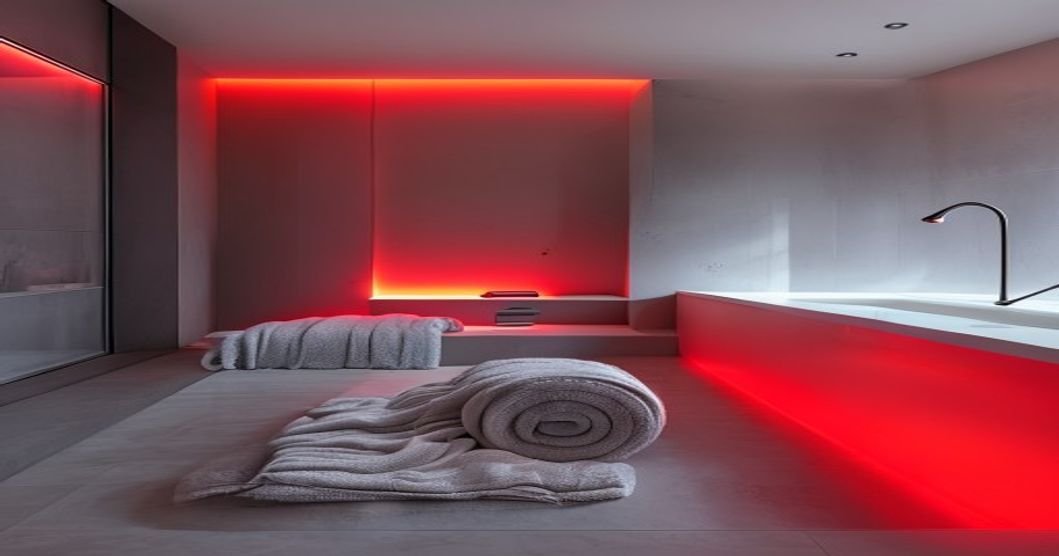
The “recovery stack” – a routine combining sauna, cold plunge, red light therapy, and sometimes red-light-plus-meditation – has become the aspirational home wellness setup of 2026. The Instagram version costs $15,000+. The pragmatic beginner version costs under $1,500 and delivers 80% of the results.
This is the beginner’s guide to building an effective recovery stack at home without going bankrupt.
Curated Home Sauna Kit on Amazon
All our top home-sauna picks – blanket, cabin, thermometer, and post-round essentials – collected in a single Amazon Idea List. Under $2,000 total for the whole starter kit.
What “recovery stack” actually means
A recovery stack is a coordinated routine of thermal (heat + cold) and photobiomodulation (red light) tools used together to support:
- Physical recovery – reduce muscle soreness, accelerate return-to-training
- Sleep quality – improve sleep onset and depth
- Stress regulation – lower baseline cortisol and improve resilience to daily stressors
- Skin health – collagen support, some anti-aging effects
- Mood – hormetic stress from cold + heat correlates with subjective mood improvement in studies
The $1,500 beginner stack
Real gear, real results, real budget:
- Infrared sauna blanket ($400-$500) – covers the heat modality without needing a cabin or an electrical circuit
- Ice Barrel or budget insulated cold plunge tub ($400-$500) – covers the cold exposure modality with manual ice; upgrade to chiller when budget allows
- Compact red light therapy panel ($400-$500) – covers the photobiomodulation modality; upgrade to full-body panel later
Total: $1,200-$1,500. Delivers real practice for 6-12 months before you outgrow any single component.
Weekly protocol for the beginner stack
Monday (Training day – if you train)
- Sauna blanket 25 min – 2 hours after training
- Red light on trained muscles 10 min – immediately after sauna
Tuesday (Cold day)
- Cold plunge 3 min – morning
- Red light on face 15 min – midday
Wednesday (Rest day)
- Sauna blanket 30 min – evening, 2 hours before bed
Thursday (Training day)
- Sauna blanket 25 min – 2 hours after training
- Red light on trained muscles 10 min – immediately after sauna
Friday (Contrast day)
- Sauna blanket 20 min, cold plunge 3 min, sauna blanket 15 min – evening
- End with sauna to avoid pre-bed sympathetic activation
Saturday (Long recovery)
- Sauna blanket 40 min – afternoon
- Cold plunge 3 min – immediately after
- Red light 15 min – late afternoon
Sunday (Reset day)
- Optional: red light 15 min on face – morning
- Otherwise rest
Starter gear at each budget tier
Beginner Sauna Component ($400 sauna blanket)
The single-purchase entry to the heat modality. Full-body length, respectable EMF, real infrared heating. Best value in the stack.
Beginner Cold Component ($400 insulated tub)
The Ice Barrel or comparable insulated barrel. Add ice manually, plunge for 2-5 min. No chiller, no electrical, no permanent install.
Beginner Light Component ($400 compact panel)
A dual-wavelength (660nm + 850nm) compact panel with adjustable stand. Fits on a desk, wall, or portable stand. Real therapeutic irradiance.
Recovery Stack Journal (Track What Works)
The single most-underrated recovery tool. Log sessions, subjective energy, sleep quality, workout performance. Real data beats hopeful interpretation.
Water Bottle (Hydration Non-Negotiable)
Sauna sessions dehydrate you. A 32 oz insulated bottle by your setup makes daily hydration frictionless. Under .
Bathrobe + Towel Set (Practical Comfort)
The between-session transitions matter for consistency. A dedicated bathrobe + oversized towel means you actually do the routine daily instead of skipping.
Upgrade path (what to add when)
Month 3-6
Upgrade the cold plunge tub to a chiller-equipped unit ($1,500-$2,000). Eliminates ice hauling, makes daily use realistic year-round.
Month 6-12
Upgrade the sauna to a 1-2 person cabin ($3,000-$3,500) if you’re using the blanket 5+ nights per week. Cabin experience is meaningfully better and you’ll get it.
Month 12+
Upgrade the red light panel to a full-body unit ($1,500-$2,500) if you’re doing 4+ RLT sessions per week. Cuts session time from 40 min to 10 min.
Total invested if you upgrade all three
$5,000-$8,000 over 12-18 months. Spread across time = manageable. Everything you buy in Year 1 you continue to use in Year 3.
What NOT to buy for a beginner stack
- Under- sauna blankets – do not meet basic infrared specifications
- Under- red light panels – inflated irradiance claims, no therapeutic dose
- DIY chest freezer cold plunges – waterproofing failures common, insurance risk
- PEMF mats, grounding sheets, and other adjacent wellness devices – not well-supported by research, competes with your budget
- ,000+ premium cold plunges – as a beginner, you don’t know your preferences yet
The honest bottom line
You do not need to spend ,000 to have a real recovery practice at home. The beginner stack at $1,200-$1,500 delivers real physical, mental, and sleep benefits within 4-6 weeks of consistent use.
Start with the blanket + Ice Barrel + compact red light. Use them for 3 months. Track the effects in a journal. THEN decide what to upgrade based on what you actually used most.
Consistency beats gear. A ,500 stack used 5x/week outperforms a ,000 stack used once a month.
Shop the Amazon Storefront
Every product we recommend for your home recovery setup – saunas, cold plunges, red light, and more – curated in one Amazon Storefront.
Try Audible free for 30 days – great for meditation, sleep, and recovery-focused audiobooks
As an Amazon Associate and Amazon Influencer, we earn from qualifying purchases at no extra cost to you.
Leave a Reply