Disclosure: As an Amazon Associate, HotColdRecovery earns from qualifying purchases at no extra cost to you. This site is research/synthesis-based, not hands-on tested.
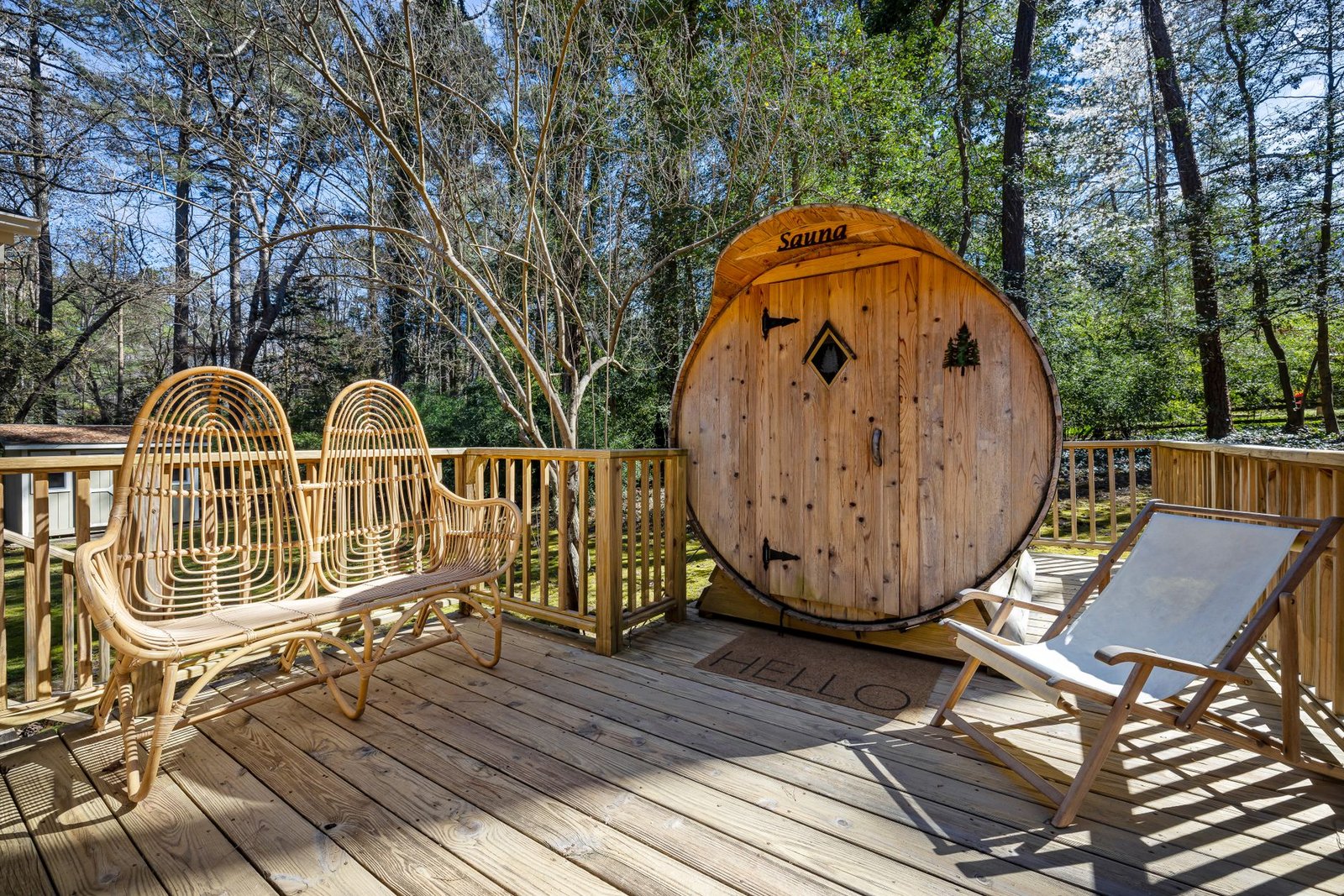
A traditional barrel sauna is one of the more enjoyable ways to spend under $6,000 on your property. Unlike an indoor sauna kit that eats up basement square footage, a barrel sauna sits in the backyard, warms a compact interior relatively quickly, and doubles as an actual landscape feature. If your climate goes below freezing more than a couple of months a year, a well-built cedar barrel saves you the “should I go to the sauna tonight?” indecision by being twenty steps from the back door.
Curated Home Sauna Kit on Amazon
All our top home-sauna picks – blanket, cabin, thermometer, and post-round essentials – collected in a single Amazon Idea List.
Why the barrel shape works
Cedar barrel construction has three things going for it that a rectangular shed does not. First, the curved shape means less internal air volume for the same seating capacity, so the sauna tends to warm up faster than a boxier cabin of similar seating (actual warm-up time depends on the heater, insulation and outdoor temperature – check the manufacturer’s figures). Second, water rolls off the outside instead of pooling. Third, the staves are held by bands that let the wood expand and contract seasonally while keeping the joints tight. Wood species varies across the picks below – cedar, Canadian hemlock and Nordic spruce all appear – so follow each maker’s finishing and care guidance.
The trade-off is capacity efficiency. Curved walls mean a barrel generally fits fewer people than a rectangular cabin of the same footprint, and listed capacities assume close seating – check each listing’s stated capacity and interior dimensions against how many people will actually use it. If you have five or more regular users, size up.
What to look for
- Wood species: Western red cedar (best), Nordic spruce (good), thermally treated pine (budget). Avoid pressure-treated anything – the chemicals off-gas at heat.
- Heater sizing and type: Heater output should match the sauna’s interior volume – use the heater the manufacturer specifies for that model rather than swapping in your own. Confirm whether the included heater is electric or wood-burning, its kW rating and its voltage before ordering.
- Electrical requirement: Electric barrel heaters run on a dedicated 220-240V circuit sized to the heater (the Smartmak listing, for example, specifies 30A). Hardwiring must be done by a licensed electrician, usually under a permit, and outdoor wiring needs weather-rated components – factor that into the total budget, especially if the run from your panel is long.
- Foundation: Barrels need a firm, level, well-drained base that can carry the full weight of the sauna and its users – compacted gravel, pavers or concrete, following the manufacturer’s foundation instructions. Avoid bare soil or a slope.
- Wind kit: If you get 40+ mph gusts, a barrel needs cradle straps rated for it. Ask before ordering.
Common upgrades worth budgeting for
Add $200-400 for a proper chimney (with wood-fired models), $150 for a canopy roof kit if you plan on year-round use in wet climates, and $80-120 for a decent bucket-and-ladle set with a birch aroma essence. Use only sauna-specific aroma products, diluted as directed, and add water to the stones a little at a time – the steam it produces can scald.
Recommended Picks (Amazon US)
Breezestival Outdoor Barrel Sauna, 4-6 Person
A solid-wood barrel sized for 4-6 people, with a panoramic 8mm tempered glass door and side windows that keep the backyard view open during a session. It ships with a 220V/6kW electric heater and sauna stones, so it can be run dry or with water on the rocks for a traditional steam-style round, and the controller handles temperature and timer settings. The waterproof, heat-insulating roof tarp is designed to hold heat in, and a full accessory kit is included. No external power cord is supplied – Breezestival recommends that installation, electrical connections and maintenance be carried out by qualified professionals.

- Spacious 4-6 Person Barrel Sauna: Designed for shared enjoyment with family and friends. The panoramic glass door and side windows…
- Premium Durable Construction: Crafted with solid wood, 8mm tempered glass, and a 6KW sauna heater for fast and efficient heating. …
- Intelligent Control System: The user-friendly controller allows you to adjust temperature and set the timer with just a few presse…
Smartmak Outdoor Wood Barrel Sauna Room, 6 Person
The group option here: a 71″W x 71″D x 71″H Canadian hemlock barrel built for six, running on 220V/6kW at 30A with a temperature range up to 195°F. The heater mounts on a separate rack, and the complete kit includes sauna rocks, a water bucket, spoon and interior light. A bitumen roof plus the included canopy handle weather and limit heat loss through the top of the barrel.

- 【Luxurious Size】Our spacious home wooden sauna size is 71"W x71"D x 71"H. Large space for 6 person use who want to enjoy the benef…
- 【Fast Heating】Voltage/Power: 220V/ 6KW. Temperature Range 0°C – 90°C / 32°F – 195°F, Current: 30A, our electric Heater is easy to …
- 【Best Material】With high performance, high strength ideal imported Canadian Hemlock is perfect for sauna construction. Together wi…
INFRADELUX Premium 4 Person Cedar Barrel Sauna
A cedar barrel for four, powered by a Harvia 6kW heater. The barrel geometry is designed to improve heat circulation and shorten warm-up time, and the cedar shell is topped with a waterproof asphalt shingle roof for outdoor durability. Essential sauna accessories are included as a starter package.

- Outdoor Barrel Sauna for Home Backyard Spa:Transform your outdoor space into a luxury wellness retreat with this Outdoor Sauna Bar…
- Authentic Traditional Sauna Experience with Harvia Heater:Powered by a premium Harvia 6KW sauna heater, this Outdoor Sauna deliver…
- Space-Efficient Barrel Structure Design:The efficient barrel sauna shape improves heat circulation and reduces warm-up time while …
Bathology Eurosauna 8159 Outdoor Barrel Sauna Kit (Up to 3 Persons)
The smallest footprint of the four, this kit is designed and manufactured in Estonia and sized for up to three people. Construction is extra-thick Nordic spruce with 1.65″ barrel staves and 1.1″ front and rear walls, with a tempered glass entry door that lets daylight in. Benches and backrests are smooth alder, chosen to stay comfortable at heat and resist moisture, and the kit ships with a sauna heater and stones. The listing does not spell out whether the heater is electric or wood-burning, or its power rating – confirm the heater type, output and any electrical or chimney requirements with the seller before ordering.

- AUTHENTIC ESTONIAN SAUNA EXPERIENCE – Designed and manufactured in Estonia, a country renowned for its rich sauna tradition, bring…
- PREMIUM SOLID SPRUCE CONSTRUCTION – Crafted from extra-thick Nordic Spruce with 1.65" barrel staves and 1.1" front and rear walls …
- BEAUTIFUL TEMPERED GLASS ENTRY DOOR – Features a thick tempered glass door that adds a modern look while allowing natural light in…
Related Reading
- The Recovery Stack for Beginners: Sauna + Cold + Red Light Under $1,500
- Best Home Infrared Saunas Under $3,000
- Best Cold Plunge Tubs Under $2,000
Comparison: the four picks above
| Pick | Capacity | Best for |
|---|---|---|
| Bathology Eurosauna 8159 | Up to 3 persons | Smaller yards, couples or solo use |
| Breezestival Barrel Sauna | 4-6 person | Family use, dry or steam sessions with the included stones |
| INFRADELUX Cedar Barrel | 4-person | Cedar build with a Harvia 6kW heater |
| Smartmak Wood Barrel Sauna Room | 6-person | Groups, entertaining, larger households |
Safety and placement considerations
Clearance matters more than most buyers expect. Follow the manufacturer’s stated clearances from combustible materials like fences, siding and overhanging trees. If a model uses a wood-burning stove, it also needs the stove maker’s clearances, a properly installed chimney with a spark arrestor, a carbon monoxide alarm, and a check of local fire rules and burn bans before first use. Check local building codes before ordering – some municipalities require a permit for a structure over a certain size or a dedicated electrical run, and finding this out after delivery is a genuinely bad day.
Door orientation is worth planning before the pad is poured. Facing the door away from prevailing winter wind keeps entry and exit noticeably more comfortable, and facing it toward your house shortens the cold walk back in January – you cannot change this after installation without moving the whole unit.
Ventilation inside a barrel needs a working intake vent near the heater and an exhaust vent near the roof peak. This is not optional – without proper airflow the air in a small sealed barrel quickly becomes stale and uncomfortable, and heat distribution becomes uneven.
Using it safely: Keep sessions short, especially at first, drink water before and after, and avoid alcohol before or during a session. Leave the sauna right away if you feel dizzy, light-headed or unwell. Children should only use a sauna with direct adult supervision and for brief, cooler sessions, and should never be left alone in or near it. Never touch the heater or stones, and keep the door free of locks or latches that could trap someone inside.
Common mistakes first-time buyers make
- Underbudgeting the electrical work. The barrel sauna price tag does not include a licensed electrician running the dedicated 220-240V circuit the heater requires (amperage per the listing), or any permit. Get a quote before you order, not after.
- Skipping the foundation prep. A barrel set directly on dirt or uneven ground settles unevenly within the first year, which stresses the stave joints and can eventually cause leaks at the seams. Pea gravel over a compacted base is the minimum acceptable foundation.
- Assuming any wood species performs the same. Pressure-treated lumber off-gasses chemicals at sauna temperatures and should never be used anywhere near the heat source. Stick to the cedar, spruce, or thermally treated pine the manufacturer specifies.
- Forgetting wind exposure in an open yard. A barrel in a fully exposed yard with no windbreak may need anchoring or tie-down straps in windy regions – ask the manufacturer what it recommends before ordering.
Maintenance and care
Reseal the exterior wood every 1-2 years with an exterior-grade oil finish appropriate for the wood species – cedar handles weather better than most softwoods, but it is not maintenance-free outdoors. Check the roof shingles or roofing material annually before winter, especially after the first year when initial settling can loosen fasteners. Clear snow load off the roof after heavy storms the same way you would a shed roof; barrels are not typically engineered for the same snow load as a house roof. Inside, wipe down benches after each session and leave the door propped open between uses to let the interior fully dry – trapped moisture is what eventually causes wood to warp or mildew, even on quality cedar. Check the heater’s stones (if applicable) annually and replace any that have cracked from repeated heat cycling.
FAQ
Q: How long does a barrel sauna actually last?
Lifespan depends on the wood, climate, foundation, sealing and roof upkeep, so check the manufacturer’s warranty terms as a guide. Electric heater elements are a wear part and may need replacing before the barrel itself does.
Q: Can I install a barrel sauna without an electrician?
For the barrel assembly itself, yes, most kits are designed for DIY assembly with basic tools. For the electrical hookup, no – the dedicated 220-240V circuit is a job for a licensed electrician, usually with a permit and inspection, both for safety and to keep any homeowner’s insurance valid.
Q: Do I need a permit for a backyard barrel sauna?
It depends on your municipality and the structure’s size – some jurisdictions treat it like a shed and require nothing, others require a permit for anything with a dedicated electrical circuit. Check before ordering, since this varies widely even within the same state or province.
Q: How much does it cost to run a barrel sauna monthly?
It depends on the heater’s kW rating, warm-up time, how often you use it, your outdoor temperature and your local electricity rate. Multiply the heater’s kW by the hours it runs (including warm-up) and by your rate per kWh for a rough estimate.
Q: Is a wood-fired or electric heater better for a barrel sauna?
Electric is simpler, faster to heat, and does not require sourcing firewood or managing a chimney – it is the more common choice for backyard installs. Wood-fired heaters deliver a more traditional experience and do not depend on electrical service, which matters for off-grid or rural properties, but require more ongoing effort per session.
Budget breakdown: the real total cost
The barrel sauna sticker price is rarely the final number. Budget for a foundation, a licensed electrician’s dedicated circuit run plus any permit, a chimney if the model is wood-fired, a canopy or roof upgrade for wet climates (some picks above already include one), and a bucket-and-ladle set if it is not in the box. Together these can add a meaningful amount to the true out-the-door cost – which is worth knowing before you compare the sticker price against a boxed indoor infrared cabin that ships closer to plug-and-play. None of this makes the barrel a worse choice; the traditional high-heat experience and the yard-feature appeal are real advantages. It just means the sticker price of the picks in this guide understates what a fully installed, properly finished setup actually costs.
Q: Can a barrel sauna be moved once it’s installed?
Technically yes, since most are not permanently bolted to a foundation, but it is a multi-person job given the weight, and repeated moves stress the stave joints. Pick the final location carefully rather than planning to relocate it later.
Q: Do I need a permit or insurance notification for a backyard barrel sauna?
Check local building codes before ordering – requirements vary widely by municipality, and some require a permit specifically once a dedicated electrical circuit is involved. It is also worth a quick call to your home insurance provider, since some policies want to know about permanent outdoor structures with electrical or heat elements.
Shop the Amazon Storefront
Every product we recommend for your home recovery setup – saunas, cold plunges, red light, and more – curated in one Amazon Storefront.
Try Audible free for 30 days – great for meditation, sleep, and recovery-focused audiobooks
As an Amazon Associate and Amazon Influencer, we earn from qualifying purchases at no extra cost to you.


Leave a Reply