Disclosure: As an Amazon Associate, HotColdRecovery earns from qualifying purchases at no extra cost to you. This site is research/synthesis-based, not hands-on tested.
A massage gun is one of the most affordable pieces of home recovery equipment. Under $100 gets you something functional. Around $300 gets you a full-size device with a stronger motor, more attachments, and app features. Beyond $500 you are paying for brand, quieter motors, and premium attachments, not fundamentally better percussion.
Full Recovery Kit Under $500 on Amazon
Our complete home recovery kit for weekend warriors and desk athletes – massage gun, compression, foam roller, and sleep accessories – all in one Amazon Idea List. Everything under $500.
What actually matters when comparing
Ignore the marketing spec of “amplitude.” What actually matters:
- Stall force (pounds): How hard you can push the gun into a muscle before the motor bogs down. Under 30 lbs is fine for pre-workout activation. Deep tissue on quads or glutes needs 45+ lbs. Stall-force figures are manufacturer-listed, so treat them as a rough guide rather than a guarantee.
- Noise level (decibels): Under 55 dB is “TV volume.” Over 65 dB is loud enough that your family will complain. This matters more than you think when you are using it every day.
- Battery life: Three hours of continuous use covers a whole training block between charges. Listed runtimes vary widely by model, so check the battery spec before you buy.
- Attachment quality: The ball head is the general-purpose attachment you will likely use most. A cheap plastic ball head cracks. Buy something with an over-molded rubber ball.
When you do not need one
If you are training two hours a week or less, an around-$20 lacrosse ball on the floor covers the same recovery use case. Massage guns earn their keep at four-plus training hours per week, especially for anyone with chronically tight IT bands, calves, or upper traps.
A note on heat + cold heads
Some newer guns (RENPHO’s Thermacool, Therabody’s newer models) offer heated and cooled heads. RENPHO lists heating up to 113°F and cooling down to 47°F on the Active Thermacool, with a quick switch between the two. Whether you use both modes or only the heat depends on your routine – if you want sustained cold, a dedicated ice or plunge setup is a different tool.
Recommended Picks (Amazon US)
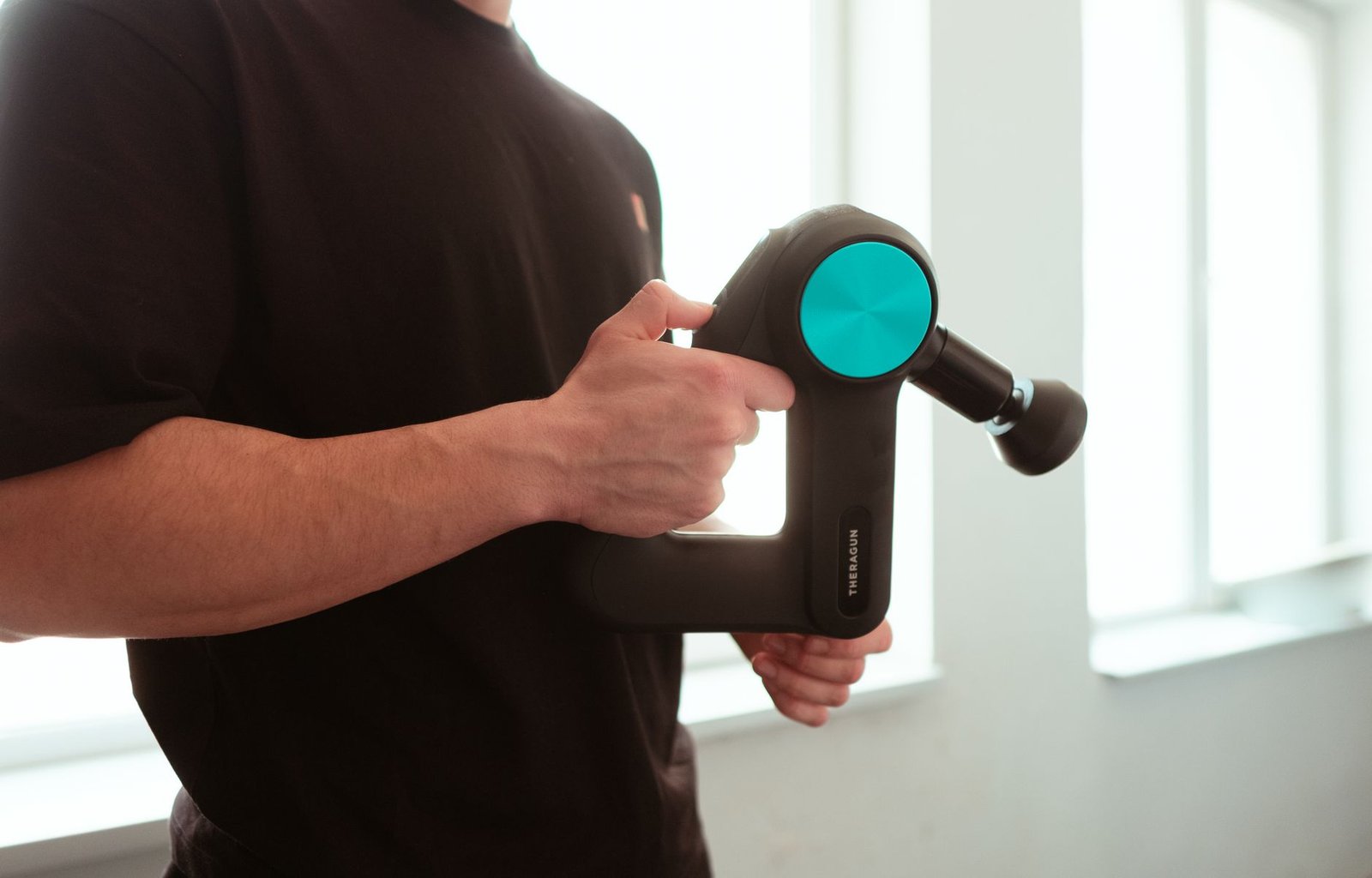
- Theragun Elite (5th Gen) Percussion Massage Gun
- Hyperice Hypervolt 2 Pro Percussion Massage Gun
- Ekrin Athletics B37v2 Percussion Massage Gun
- OPOVE M3 Pro 2 Massage Gun
- Bob and Brad Q2 Mini Massage Gun (Travel Size)
- RENPHO Active Thermacool Massage Gun (Heat + Cold)

- 5-in-1 Massage Gun for Best Value: Top-rated Elite offers the most popular features of a Theragun deep tissue massager in an ultra…
- 5 High-Quality Foam Attachments: Thumb for trigger points and lower back pain relief, Cone as a hand massager and for pinpointing …
- Ergonomic Design with Patented Triangle Handle: Handheld massager with flexible positioning for reduced stress on the wrist, hands…
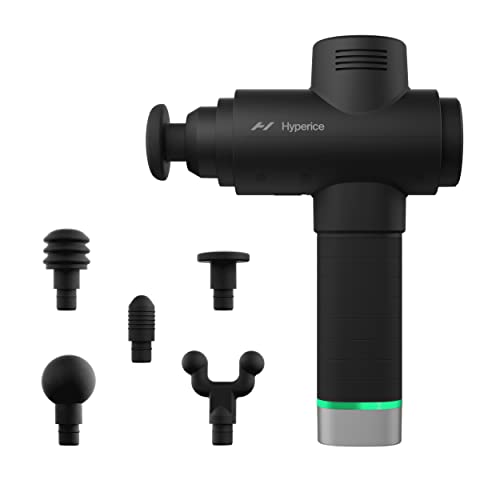
- The Hypervolt 2 Pro is our strongest percussion device, offering deep-penetrating relief to stiff muscles, so you can train harder…
- Warm up and recover like the pros do, with guided routines from top athletes and automatic speed adjustment with the Bluetooth con…
- Think of Hypervolt like a massage therapist to massage away all your stress and tension. Get rid of muscle knots and loosen up. It…
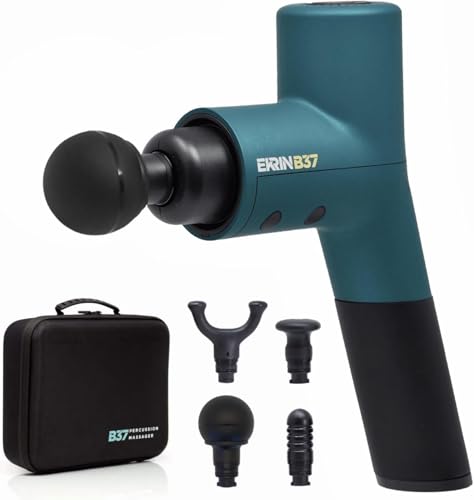
- Professional-Grade Electric Massager: Equipped with a powerful level 3 brushless motor, the B37 massage gun delivers a potent deep…
- Optimized Speed Range: Tailor your massage experience with 5 adjustable speeds (1400-3200 RPM) engineered for highly personalized …
- 4 Locking Attachments: The B37v2 features 4 interchangeable attachments including a new silicone ball. This deep tissue massager t…
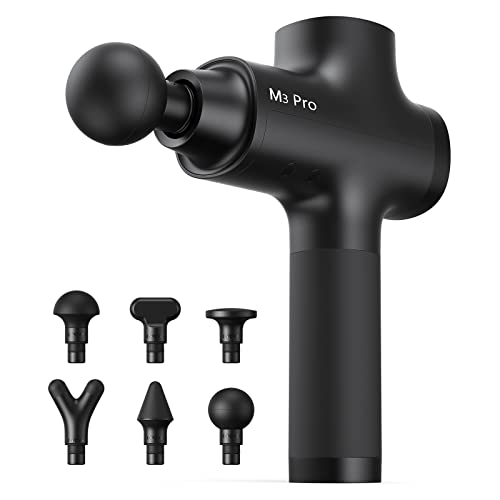
- You Get What You Pay For – We work out daily and invest a lot of time and effort into our fitness. Therefore, it's even more impor…
- Professional-grade Performance – 12mm amplitude precise percussion deep massaging; max 70lbs stall force, 4-8 hours long battery l…
- Low Noise and Durable – M3 Pro 2 massager combines advanced high-precision construction with a sound-absorbing & drop resistant ou…

- Compact Power for Deep Tissue Massage – Bring focused percussion to larger muscle groups without carrying a bulky full-size device…
- Pocket-sized for Travel and Work – Keep a massage gun within reach without giving up space in your backpack, gym bag, or carry-on.…
- Quiet, Simple One-button Control – Fit a massage routine into your day without loud operation or complicated controls. The brushle…

- DUAL HOT & COLD THERAPY: Heating up to 113°F warms muscles before morning workouts, and cooling down to 47°F refreshes legs after …
- POWERFUL DEEP PERCUSSION: Metal housing delivers 10mm amplitude across 5 speeds (1800–3200 RPM) for sensitive neck after desk work…
- ULTRA-FAST CHARGING & LONG BATTERY LIFE: 15W PD charging (1.5–2 hours) keeps the long-lasting back massager ready for weekend trip…
Related Reading
- The Recovery Stack for Beginners: Sauna + Cold + Red Light Under $1,500
- Best Home Infrared Saunas Under $3,000
- Best Cold Plunge Tubs Under $2,000
Matching the gun to how you’ll actually use it
- Daily driver for a home gym or desk-bound job: a quiet motor and enough power for larger muscle groups matter more than a premium brand name. The Ekrin B37v2 (5 speeds, sound-insulated brushless motor, up to 8 hours of listed battery life) or Hypervolt 2 Pro (90-watt motor, five speeds, Bluetooth app routines) cover this without the Theragun price tag.
- Travel and gym bag use: weight and size beat power. The Bob and Brad Q2 Mini lists up to 35 lb of stall force and a 7 mm amplitude in a 5.7-inch, 0.95 lb body, so it trades some force for something that survives a carry-on and does not eat your whole bag.
- Serious lifters and endurance athletes with chronic tight spots: a patented triangle handle for hard-to-reach spots like lats and glutes, an OLED screen with adjustable speed ranges, and five foam attachments are what you pay up for in the Theragun Elite tier.
- Budget-first buyers focused on everyday desk tightness: the OPOVE M3 Pro 2 or RENPHO Active Thermacool deliver the core percussion experience without the flagship price, and for two hours a week of training or less, you will not feel the difference.
Comparison: the six picks above
| Pick | Best for |
|---|---|
| Bob and Brad Q2 Mini | Travel, gym bag, light use |
| OPOVE M3 Pro 2 | Budget daily use |
| RENPHO Active Thermacool | Pre-workout heat + percussion combo |
| Ekrin Athletics B37v2 | Regular training, quiet operation |
| Hyperice Hypervolt 2 Pro | Daily use, Bluetooth app programs |
| Theragun Elite (5th Gen) | Serious athletes, hard-to-reach spots |
Common mistakes first-time buyers make
- Buying based on amplitude alone. A gun advertising 16mm amplitude but a soft, underpowered motor stalls out the moment you press into a glute or quad. Stall force is the number that predicts real-world performance, not amplitude.
- Running it too long in one spot. Ninety seconds to two minutes per muscle group is plenty. Longer is not better – it just risks bruising, especially over bone or a joint.
- Pressing directly on a joint or bone. Percussion guns work on muscle tissue. Running one directly over a knee, elbow, spine, or shin bone is uncomfortable at best and can bruise the area at worst. Stay on the muscle belly.
- Ignoring the noise spec and regretting it. A gun that’s fine to test in a quiet showroom can be genuinely disruptive at 65+ dB in a shared apartment or while a partner is sleeping. Check the decibel rating before buying if you plan on evening use.
Maintenance and care
Wipe the attachment heads after each use, especially the foam ball head – sweat and skin oils break down foam faster than the plastic core underneath it. Most guns ship with a charging dock or cable; keeping the battery topped off between 20-80% rather than habitually running it to zero extends the pack’s usable life by a meaningful margin over a couple of years. If an attachment head starts to crack or the rubber over-mold peels, replace it rather than continuing to use it – a degraded head transmits less energy and can rattle loose at higher speeds. Store the gun in its case rather than loose in a gym bag; the motor housing is more delicate than it feels in your hand.
FAQ
Q: How long should a massage gun session last?
Ninety seconds to two minutes per muscle group, five to ten minutes total for a full-body pass. Longer sessions on one spot do not add benefit and increase bruising risk.
Q: Should I use a massage gun before or after a workout?
Both, for different reasons. A short 30-60 second pass on a target muscle can be part of a warm-up. After training, a longer, lighter pass later in the day can be part of a cool-down or wind-down routine.
Q: Can a massage gun be too strong?
Yes. More pressure and higher speed are not automatically better – a mid-range speed setting with firm but comfortable pressure is a sensible starting point, rather than the maximum setting run at full stall force.
Q: Are cheap massage guns actually functional, or a waste of money?
A genuinely budget unit (sub-$100) with a reasonable stall force and a rubber-over-molded head does real work for someone training a few hours a week. The gap opens up at higher training volumes and for anyone with chronically tight areas that need sustained deep-tissue pressure.
Q: Who should avoid using a massage gun?
Keep it off the head, the front and sides of the neck, the spine and other bony areas, and skip it directly over varicose veins, recent injuries or surgical sites, broken or irritated skin, and areas with reduced sensation. Talk to your doctor first if you have a history of blood clots, a circulation or bleeding condition, take blood thinners, are pregnant, or have an implanted device such as a pacemaker – percussion can also cause bruising more easily in some of those cases.
Building a routine around a massage gun
A massage gun works best as a bookend tool, not a standalone routine. A short 60-90 second pass on the muscles you are about to train fits into a warm-up; a longer 5-10 minute full-body pass a few hours after training, or in the evening, fits into a wind-down routine. Where a massage gun genuinely underperforms compared to other tools: it is a local, muscle-by-muscle tool rather than a whole-body experience like a sauna session or a contrast routine, and it cannot substitute for actual mobility work or stretching if your limitation is range of motion rather than tightness. A practical pattern is to use it two to four times a week on specific problem areas – calves, upper traps, glutes, IT bands – rather than as a full-body daily ritual, and that targeted use is exactly what the tool is built for.
Storage and travel considerations
A full-size gun like the Theragun Elite or Hypervolt 2 Pro is bulkier and heavier than a compact model – factor that in if daily commuting to a gym is part of your routine. The Bob and Brad Q2 Mini and similarly sized compact guns are built around fitting in a normal gym bag or even a large coat pocket, at the cost of stall force and amplitude. If you fly with a massage gun regularly, check the battery’s watt-hour rating against airline carry-on limits (most consumer massage guns fall well under the common 100Wh threshold, but it is worth a two-minute check before a trip rather than finding out at security). Checked baggage is generally fine for any of these regardless of battery size, since the lithium battery restriction applies specifically to carry-on placement in most jurisdictions.
Shop the Amazon Storefront
Every product we recommend for your home recovery setup – saunas, cold plunges, red light, and more – curated in one Amazon Storefront.
Try Audible free for 30 days – great for meditation, sleep, and recovery-focused audiobooks
As an Amazon Associate and Amazon Influencer, we earn from qualifying purchases at no extra cost to you.


Leave a Reply