
Disclosure: As an Amazon Associate, HotColdRecovery earns from qualifying purchases at no extra cost to you. This site is research/synthesis-based, not hands-on tested.
A cold plunge is not a bathtub you empty after one use. It is closer to a small pool – the water sits in the tub for weeks or months, cycles through a chiller, and needs the same sanitation attention as a hot tub. Neglect it and you will get biofilm, cloudy water, an itchy body, or in the worst case a skin infection that ends your recovery streak. This is the routine that actually keeps the water clean.
Curated Cold Plunge Kit on Amazon
All our cold plunge picks – tub, chiller, water treatment, thermometer, and exit safety – collected in a single Amazon Idea List. Everything you need for a proper home cold plunge practice.
Weekly checklist (5 minutes)
- Test the water. Free chlorine 2-4 ppm, pH 7.2-7.6, alkalinity 80-120 ppm. Test strips are inexpensive.
- Adjust as needed. Low chlorine: add sanitizer per the tub-volume label. Low pH: a spa pH increaser (sodium carbonate). Low alkalinity: a spa alkalinity increaser (sodium bicarbonate). High pH: a spa pH decreaser. Dose every product exactly as its label directs for your tub’s gallon count, add one product at a time, and retest before adding more.
- Skim any debris. Leaves, insects, hair – a small pool net works.
- Rinse the filter. Pull it out, hose it off. Every 4-6 weeks replace or deep-clean with filter cleaner.
- Check chiller intake for kinks or blockages. The chiller is the most expensive part of your system.
Chemical safety: Read and follow every product label, including any gloves or eye protection it calls for. Never mix chemicals with each other (for example, chlorine and acid, or chlorine and bromine products), and never put them in the same scoop or bucket. Always add chemical to water, never water to chemical. Store and handle them in a well-ventilated area, away from heat, and out of reach of children and pets. Keep the tub covered, and locked if the cover allows, when no one is using it, and supervise children around it at all times.
Monthly (30 minutes)
- Wipe the interior above waterline with a diluted vinegar or mild non-abrasive cleaner. Skin oils build up on this “bathtub ring.”
- Shock the water with a non-chlorine oxidizer (potassium monopersulfate), dosed per the label for your tub’s volume. This burns off organic contaminants that regular chlorine misses.
- Verify the ozone generator is running (if you have one). Check that its indicator light is on (if it has one) and that bubbles appear at the injector while the circulation pump runs. You may notice a faint ozone smell near the tub, but don’t lean in to sniff it, since ozone irritates the lungs. If the smell is strong, switch the unit off and check the installation.
The role of ozone
Ozone (O3) is a supplementary sanitizer that oxidizes organic matter without adding a chlorine smell. Some chiller-equipped plunges include an ozone generator, so check your model’s spec sheet. Ozone does not replace chlorine, bromine or biguanide. Keep a measurable sanitizer residual and keep testing, though some owners find they need less chemical with ozone running. A retrofit ozone kit can make sense for daily users, but only a generator built for spas and hot tubs (one that injects ozone into the water line through a venturi or air pump) belongs on a tub. Many products sold as “ozone generators” are high-output air purifiers or odor machines. They are not designed for water, and you should never use one on or near a tub people sit in. Install any spa ozone unit per its manufacturer’s instructions (or have a qualified technician do it), power it from a GFCI-protected circuit, and keep its electrical parts away from water.
Full water change frequency
With good chemistry: every 2-4 months. With ozone: every 4-6 months. If the water starts to smell “off” (chloramine, swampy, metallic), change earlier. Do not stretch it – a cold plunge is a small volume and contaminant concentration climbs quickly.
Chiller maintenance
Chillers are refrigeration units and follow the same rules: keep intake and exhaust clear (10 inches minimum on all sides), do not put them in direct sun without a shade, and check the coil fins for dust twice a year (a soft brush and vacuum works, with the chiller unplugged first). Plug the chiller only into a GFCI-protected outlet, test the GFCI regularly, keep cords and plugs off wet ground and away from the water, and don’t use light-duty extension cords. Most chillers use standard R-410a or R-32 refrigerant that never needs recharging unless there is a leak. If you notice the water is not getting cold enough and the chiller is running constantly, that is a warning sign – contact the manufacturer.
Winter shutdown (cold-climate regions only)
If your plunge lives outdoors and temperatures drop below freezing for weeks: drain the system, unplug and disconnect the chiller, blow water out of all lines with a shop vac, and cover. Freezing water in a chiller line can crack the heat exchanger and end the unit’s life.
Troubleshooting common water problems
Cloudy or milky water. Usually one of three causes: low sanitizer (test and correct first), a dirty filter restricting flow, or high total dissolved solids (TDS) from infrequent water changes. If chlorine and pH test in range and the filter is clean, cloudiness that persists past 24 hours means it’s time for a full water change rather than more chemicals – stacking sanitizer on top of high TDS water just wastes product.
Slimy or slick walls (biofilm). This is bacteria and organic film building on the tub surface, usually from body oils and sweat combined with under-dosed sanitizer. Drain fully, scrub the interior with a non-abrasive brush and diluted vinegar, rinse thoroughly, and refill with correctly dosed water. If biofilm returns within two weeks of a full clean, your sanitizer level between changes is probably too low. Test more often and keep free chlorine inside the 2-4 ppm range, dosing per the product label, rather than waiting for the monthly shock to catch up.
Strong chemical smell. Counterintuitively, a strong chlorine smell usually means you need more sanitizer, not less. That smell is chloramines – the byproduct of chlorine reacting with organic contaminants – not chlorine itself. Shock the water with a non-chlorine oxidizer to burn off the chloramines, then retest.
Chiller running constantly without reaching target temperature. Check three things in order: the cover is on and sealed between sessions (heat loss through an open or ill-fitting cover is the most common cause), the intake and exhaust vents have their full 10-inch clearance, and the coil fins aren’t caked with dust. If all three check out and the chiller still can’t hold temperature, the unit may be undersized for your tub volume or ambient conditions – see our chiller ratings guide for how tub size and room temperature affect recovery time.
Water chemistry, in more depth
Chlorine is the default sanitizer for most home tubs because it’s cheap and the test strips are inexpensive, but it’s not the only option. Bromine is the other common spa sanitizer. It is generally described as having a milder odor than chlorine, which makes it a reasonable option for anyone sensitive to the chlorine smell. It usually costs somewhat more per treatment, though the difference is small at cold-plunge water volumes, and slow-dissolving bromine tablets may dissolve more slowly in very cold water. If you switch between chlorine and bromine, follow the product directions (usually a drain and refill), and never mix the two products. Some owners run a saltwater chlorine generator instead of adding chlorine directly. This adds equipment cost and complexity, so check that the unit is rated for your tub’s small volume and for cold water.
Total dissolved solids (TDS) is the metric most owners never test but should. Every top-up and every chemical addition raises TDS, and once it climbs past roughly 1,500 ppm, chlorine stops working as efficiently even when your test strip shows correct free-chlorine levels – this is the “why does my water still look cloudy when the chemistry checks out” problem. A basic TDS meter is inexpensive and tells you definitively when it’s time for a full change rather than guessing off smell and appearance alone.
Seasonal maintenance considerations
Warm weather is harder on plunge water than cold weather. Higher ambient temperatures accelerate algae and bacteria growth and burn off chlorine faster, especially in an outdoor tub getting direct sun. In summer months, test twice a week instead of once, and consider a tub cover with a reflective or opaque top layer – clear covers let UV through and speed up chlorine breakdown the same way an uncovered pool loses sanitizer faster than a covered one.
Spring startup after a winter shutdown deserves its own checklist rather than just refilling and walking away. Inspect all hose connections and the chiller’s exterior for cracking from freeze exposure before powering anything on. Follow your chiller manufacturer’s startup procedure. Most circulation pumps must not run dry, so fill the tub first, check the GFCI, then power the chiller on and confirm the pump primes and water flows. Then balance the water and run your normal weekly routine from day one rather than assuming a long-idle system starts back at spec.
FAQ
Q: How do I know when it’s time for a full water change versus just adjusting chemistry?
If TDS is climbing past 1,500 ppm, if biofilm has returned twice within a month despite correct chemistry, or if the water has an “off” smell that shocking doesn’t resolve within 24 hours, change the water rather than continuing to chase the chemistry.
Q: Can I use regular swimming pool chemicals in a cold plunge tub?
Products labelled for spas and hot tubs are the easier choice, because their dosing directions are written for small volumes. Pool products are dosed for far larger volumes, so they are easy to overdose in a small tub. If you use one, it must list your use on its label, and you dose by the label’s directions for your tub’s actual gallon count. Never add pool chlorine tablets or pucks directly to a small tub.
Q: My eyes or skin get irritated after plunging – is that a chemistry problem?
Often, yes. Red eyes or itchy skin can mean that pH has drifted outside 7.2-7.6 or that chloramines have built up, so test right away rather than assuming it’s a normal cold-water reaction. If irritation, a rash or eye symptoms continue, stop using the tub and see a doctor.
Q: Is bromine actually better than chlorine for a home cold plunge?
Not objectively better, just different trade-offs. Bromine is usually described as smelling less harsh, but it costs more per treatment and is slightly harder to find locally compared to chlorine, which is stocked everywhere pool supplies are sold.
Q: What’s the cheapest way to keep water sane between full changes without buying an ozone system?
A consistent weekly chlorine and pH routine, done on schedule rather than reactively, is the cheapest effective method. Ozone extends the interval between full changes, but a disciplined manual routine with test strips gets you most of the way there for a fraction of the upfront cost.
Recommended Picks (Amazon US)
- AquaChek 7-Way Pool and Spa Test Strips (100 Strips) – silver strips that read pH, free chlorine, total chlorine, bromine, alkalinity, total hardness and cyanuric acid. Dip, remove, wait 15 seconds and compare with the chart on the bottle; the label suggests testing at least twice a week.
- SpaGuard Chlorinating Concentrate (14 oz, Granular – Small Tubs) – granular stabilized chlorine that is fast acting and quick dissolving with no pre-dissolving needed, and the small 14 oz container is sized for spa and small-tub use. Dose by the label for your tub’s gallon count.
- HTH Spa pH Up (2 lb) – a pH increaser for spas and hot tubs, compatible with bromine, chlorine and biguanide systems; the manufacturer’s instructions target a pH of 7.2 to 7.8 with twice-weekly testing.
- Fengind HCD-55 Spa Ozone Generator (110V, Hot Tubs & Swim Spas) – 55 mg/h ozone output rated by the manufacturer for systems up to 1,500 gallons, supplied with a 6-foot tube, check valve, four hose clamps and an AMP-4 power cord. It is 110V only and must be paired with an air pump or venturi injector. The AMP-4 plug is meant for hot-tub control packs, and many cold-plunge chillers don’t have a matching port, so confirm your plug type and plumbing before ordering. Install it per the included instructions or with a qualified technician, on a GFCI-protected circuit.
- TempPro TempAir Wireless Floating Pool Thermometer – an IPX8-rated floating water sensor intended for cold plunges, hot tubs and spas, quoted at ±0.9°F accuracy from 32°F to 140°F, with an RF link of up to 500 feet to a backlit display that keeps 24-hour max/min readings. It is built for water temperature, not ambient air.
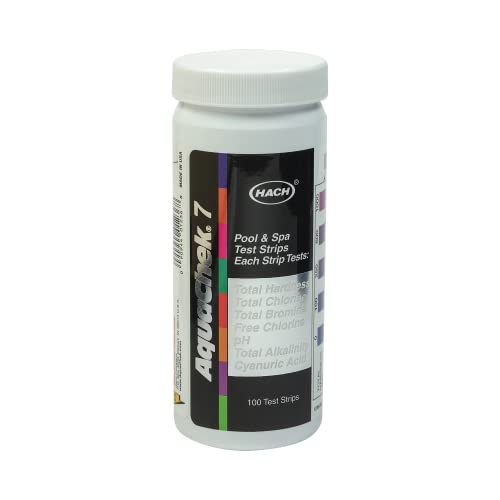
- 7-IN-1 TEST STRIPS: Tests the most critical parameters: pH, Total Chlorine, Free Chlorine, Bromine, Alkalinity, Total Hardness, & …
- AQUACHEK ACCURACY: Using medical industry technology, our test strips offer comparable accuracy to liquid tests; No measuring & co…
- EASY TO USE: No more messy drops; Just dip the silver strip, remove it, wait 15 seconds, & compare with the color chart on the bot…
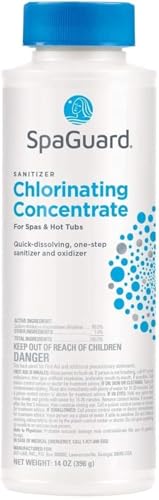
- SpaGuard Chlorine Concentrate (14 oz)
- Granular Stabilized Chlorine
- Fast Acting

- BENEFIT: Increases and balances the pH levels in your spa or hot tub water for beautiful clarity, improved sanitizer efficiency an…
- IMPROVES PERFORMANCE: Allows sanitizer to work more effectively; Prevents corrosion of spa surfaces and equipment
- CONTAINS MINERAL CRYSTALS: HTH Spa pH Up is formulated to provide a more relaxing spa experience

- 【Note1】The rated voltage of HCD-55 spa ozone kit is 110V. Please confirm before purchasing. This product can only show the generat…
- 【Note2】: HCD-55 spa ozone generator needs to be used in conjunction with the spa zone injector venturi. Before purchasing, please …
- 【High Zone Output】: Spa ozone generator uses the latest technology, reaching up to 1500 gallons. The ozone generator provides a hi…

- This sensor/transmitter is specially designed for measuring the water temperature in swimming pools, hot tubs, spas and so on. If …
- 【More Durable Sensor】Floating pool thermometer is designed with IPX8 waterproof and high-quality ABS materials, ensuring it can wi…
- 【Higher Accuracy】This pool temperature sensor features highly precise sensor, accurate to ±0.9℉(±.0.5℃) in the temperature range o…
Related Reading
- The Recovery Stack for Beginners: Sauna + Cold + Red Light Under $1,500
- Best Home Infrared Saunas Under $3,000
- Best Cold Plunge Tubs Under $2,000
Shop the Amazon Storefront
Every product we recommend for your home recovery setup – saunas, cold plunges, red light, and more – curated in one Amazon Storefront.
Try Audible free for 30 days – great for meditation, sleep, and recovery-focused audiobooks
As an Amazon Associate and Amazon Influencer, we earn from qualifying purchases at no extra cost to you.


Leave a Reply